


By Akhil Chugh
Date May 4th, 2026
For years, Indian investors faced a binary choice: the simplicity of Mutual Funds or the sophisticated (but expensive) world of Portfolio Management Services (PMS). As of April 2026, that gap has been bridged.
Today, we dive into the Specialised Investment Fund (SIF)—the new asset class designed for those who have outgrown standard benchmarks but aren’t ready for the ₹50 lakh entry barrier of a PMS.
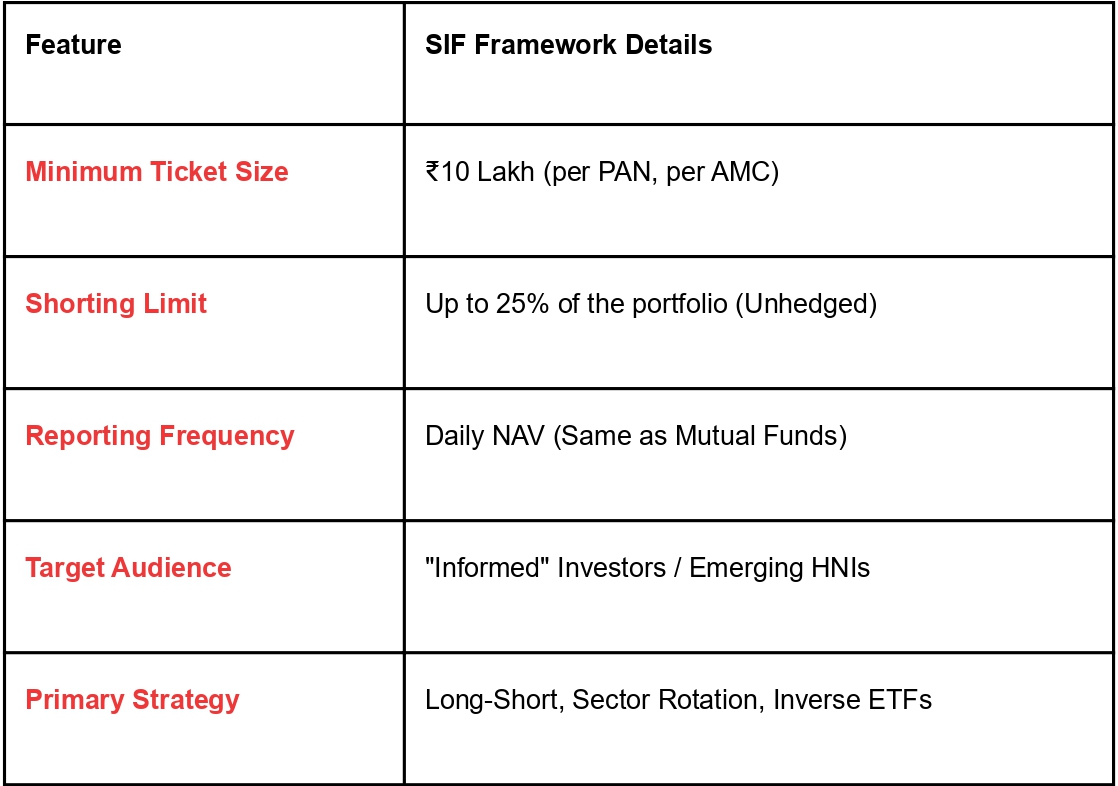
SIF at a Glance
The SIF framework is not just a new name; it is a structural shift in how “mass affluent”
capital is managed in India.
The Pros & Cons: A Balanced View
The Pros
- Downside Protection: Unlike standard equity funds that must remain 65%+ long even in a crash, SIFs can “short” the market. Data from early back-tests suggests these strategies can reduce drawdowns by 15-20% during bear phases.
- MF-Level Transparency: You get the sophistication of a hedge fund with the regulatory safety of a Mutual Fund, including daily NAVs and SEBI-mandated disclosures
- Lower Barrier to Alpha: Previously, strategies like “Long-Short” were locked behind a ₹50 Lakh (PMS) or ₹1 Crore (AIF) door. SIF lowers this entry point by 80%.
The Cons
- Higher Entry Hurdle: The ₹10 Lakh minimum keeps it out of reach for the pure retail segment and limits the ability to diversify across multiple SIF fund houses.
- Tax Implications: Depending on the fund structure, SIFs may face different tax treatments than standard equity funds, especially if they lean heavily on derivative income.
- Strategy Risk: These are “active” funds in the truest sense. If a fund manager miscalculates a short position, the fund could underperform even in a bull market.
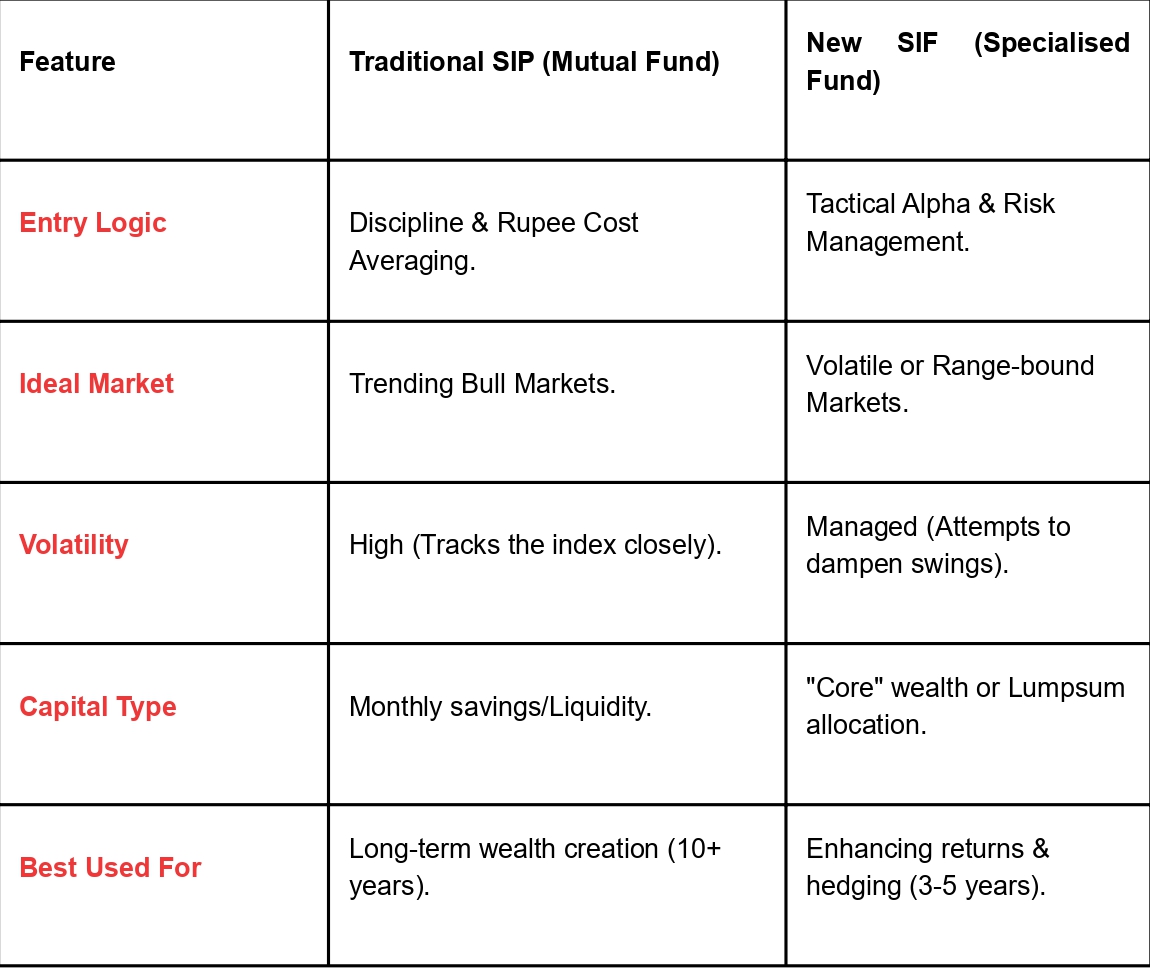
The Showdown: SIF vs. SIP
Investors often ask: “Should I keep my ₹50,000 SIP or move to a SIF?” It is important to
understand that they serve entirely different psychological and financial functions.

The Bottom Line
The SIF is not a replacement for your monthly SIP. Instead, it is a Strategic Satellite.
If you have accumulated a corpus in your standard funds and are worried about “market froth,” the SIF offers a way to stay invested while having a “safety net” that can profit when the market dips.
Money Mondays Tip:
Don’t move your entire portfolio. Consider a 15-20% allocation to a SIF to act as a stabilizer for your broader equity holdings.